
The Role of Cement Strength in Ensuring Structural Stability
07.04.2026
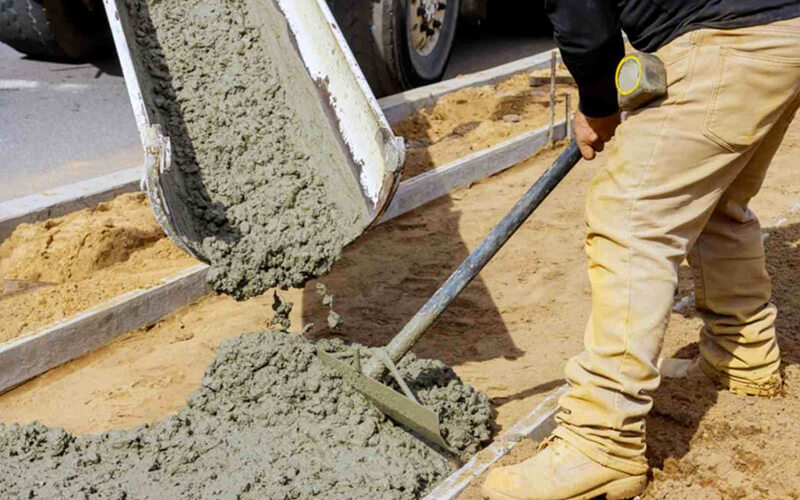
Structural stability is a fundamental requirement in construction, ensuring that buildings and infrastructure remain safe, balanced, and capable of resisting applied loads over time. From residential buildings to large-scale industrial structures, stability depends on how effectively materials perform under stress. Among these materials, cement plays a central role, as it is the primary binding component in concrete—the backbone of most structural systems.
Cement strength directly influences the performance of concrete, affecting its ability to carry loads, resist deformation, and maintain integrity over time. Strong and consistent cement contributes to stable structures, while inadequate cement strength can lead to instability, cracking, and even structural failure. Understanding the importance of cement strength is essential for engineers, contractors, and project managers focused on delivering safe and durable construction projects.
Contribution to Compressive Strength
Compressive strength is the primary property that allows concrete to support structural loads. Cement strength determines how well concrete can resist compression without crushing or deforming.
High-quality cement ensures that concrete achieves the required compressive strength, providing a stable foundation for structural elements such as columns, beams, and slabs.
Uniform Strength Distribution Across the Structure
Structural stability depends on uniform performance throughout all elements of a building. Cement strength must remain consistent across different batches to ensure that concrete behaves evenly under load.
Inconsistent cement strength can create weak zones that disrupt load distribution and compromise stability. Consistent cement quality ensures balanced structural performance.
Resistance to Cracking and Internal Stress
Cracking is one of the main threats to structural stability. Cement strength influences the concrete’s ability to resist tensile stresses and control internal strain caused by shrinkage and temperature changes.
Stronger cement reduces the likelihood of cracking, preserving the integrity of the structure. This helps maintain stability by preventing the formation of weak points.
Bonding With Aggregates and Reinforcement
Cement strength affects how well concrete bonds with aggregates and steel reinforcement. Strong bonding is essential for effective load transfer and overall structural performance.
High-strength cement creates a dense and cohesive matrix, ensuring that all components work together. This interaction enhances stability and prevents separation under load.
Early-Age Strength and Construction Safety
Early strength development is important for maintaining stability during construction. Cement must gain sufficient strength quickly enough to support loads from subsequent construction activities.
Inadequate early strength can lead to deformation or collapse during construction phases. Proper cement selection ensures that structures remain stable from the beginning.
Long-Term Strength Retention
Structural stability is not only about initial performance but also about maintaining strength over time. Cement strength influences how well concrete retains its properties under continuous use and environmental exposure.
High-quality cement supports long-term strength retention, ensuring that structures remain stable throughout their service life.
Control of Deformation and Creep
Structures experience sustained loads that can cause gradual deformation. Cement strength affects creep behavior, which determines how concrete responds to these long-term stresses.
Stronger cement helps limit excessive deformation, maintaining alignment and preventing instability. This is especially important in high-rise and long-span structures.
Performance Under Dynamic Loads
Buildings and infrastructure are often subjected to dynamic forces such as wind, traffic, or seismic activity. Cement strength influences how concrete responds to these changing loads.
Concrete made with strong cement maintains its integrity under repeated stress, ensuring stability even in demanding conditions.
Durability and Environmental Resistance
Durability is closely linked to structural stability. Cement strength contributes to the density and impermeability of concrete, protecting it from environmental damage.
Durable concrete resists moisture, chemicals, and temperature changes, maintaining its structural properties over time. This protection is essential for long-term stability.
Predictability in Structural Behavior
Engineers rely on predictable material behavior when designing structures. Cement strength must be consistent to ensure that concrete performs as expected.
Reliable cement allows for accurate design and execution, reducing uncertainty and enhancing stability. Inconsistent materials can lead to unexpected behavior and increased risk.
Reduced Maintenance and Increased Safety
Structures built with high-strength cement require less maintenance and are less prone to defects. Reduced maintenance needs contribute to sustained structural stability and safety.
By minimizing issues such as cracking and deterioration, strong cement helps ensure that structures remain safe for occupants and users over time.
Conclusion: Cement Strength as a Foundation of Stability
Cement strength is a key factor in ensuring structural stability. It influences compressive capacity, bonding, crack resistance, and long-term durability, all of which are essential for safe construction.
By selecting cement with appropriate strength characteristics and maintaining consistent quality, construction professionals can deliver stable and reliable structures. Cement strength is not just a material property—it is a cornerstone of structural stability and engineering success.